What Is a 1st Bowman Card? Why the 1st Bowman Logo Matters
Disclosure: As an Amazon Associate I earn from qualifying purchases. Some links are eBay Partner Network affiliate links. Some links on this page are affiliate links. If you buy through them, Grail Report may earn a commission at no extra cost to you. We don't accept payment for recommendations. See our Privacy Policy · Terms · Disclaimer.
Part of my Bowman 1st section.
If you collect baseball prospects, you'll hear "1st Bowman" more than almost any other phrase. Listings shout it, breakers hype it, and it's usually the first thing I check when someone asks me what a prospect card is worth. Here's what it actually means, where it came from, and why it isn't the same thing as a rookie card.
Quick version: a 1st Bowman is a player's first card in a Bowman product, marked with a small "1st" or "1st Bowman" logo. It usually comes out years before the player's official rookie card, which is why prospectors chase it.
The official definition
Topps, which makes Bowman, defines a player's 1st Bowman card as their first official baseball card, released before their official rookie card. The card is marked "1st" or "1st Bowman," usually in the upper left corner. Topps says the designation was first used in 1996 but didn't become a regular part of Bowman sets until 2003, and that since then the 1st Bowman's importance "has come to rival that of the professional rookie card."
WaxPackHero, which tracks every card with the logo, adds a detail I find useful: the logo was used in 1996 and 1997, dropped from 1998 through 2002, and returned in 2003. Their guide notes 2013 as the one year since then without it. So if you're looking at an older prospect card with no logo, it can still be a player's first Bowman. You just have to check the checklist.
A short history of Bowman
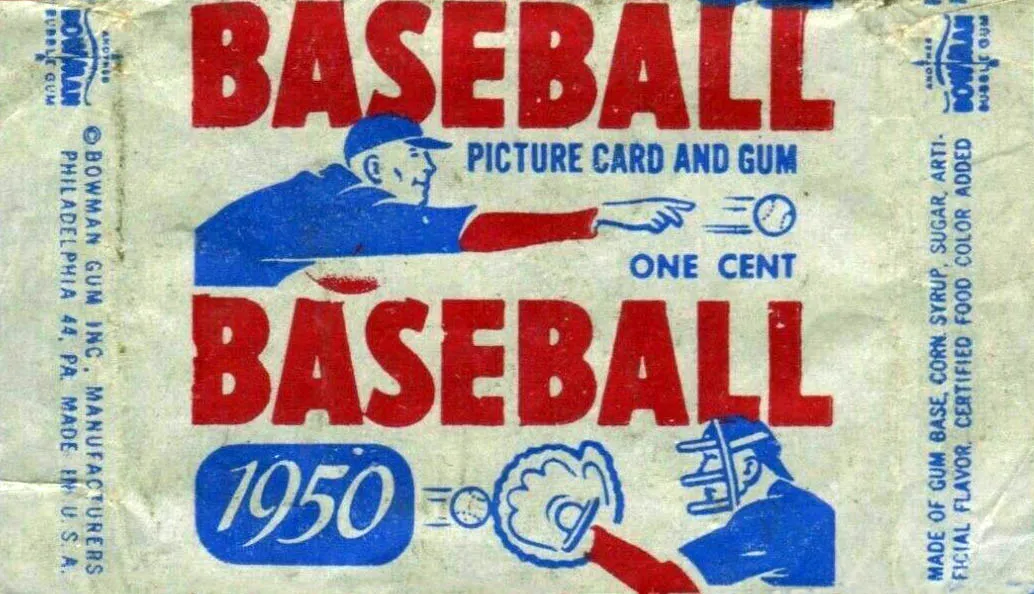
Bowman is one of the oldest names in cards. According to Topps, the Bowman Gum Company released its 1948 Bowman Baseball set and made cards through 1955. Topps bought Bowman in 1956 and retired the brand. Topps brought the name back in 1989, and in 1990 BaseballCardPedia says it repositioned Bowman as the "Home of the Rookie Card." Bowman Chrome followed in 1997. Topps describes Bowman as becoming even more prospect-focused around 2000, which is basically the brand you know today: the place where minor leaguers get their first cards.
1st Bowman vs. rookie card
This is where most of the confusion comes from. Since 2006, a baseball player's official rookie card (with the RC logo) comes after his MLB debut. A 1st Bowman shows up when he's still a prospect, often in his first pro season and sometimes right after the draft or an international signing. So a player can have a 1st Bowman in, say, 2025 and an RC years later, or never, if he doesn't make the majors.
| 1st Bowman | Rookie card (RC) | |
|---|---|---|
| When | Prospect stage, usually before MLB | After MLB debut |
| Logo | "1st" / "1st Bowman" | "RC" rookie card logo |
| Risk | Higher. Many prospects never make it | Lower. The player already debuted |
| Upside | Bigger if the player becomes a star | Depends on the player's performance |
Neither one is "the real rookie." They're different stages. I wrote more about the RC side in What Is a Rookie Card?
Why collectors pay up for it
Simple: it's the earliest certified card of a player, and if he turns into a star, everyone wants the first one. The flip side is that you're betting on a teenager or a college player. Most prospects never become stars, and plenty never reach the majors. That's why I treat 1st Bowman cards like lottery tickets with a floor. A good prospect's base 1st Bowman auto usually holds some value, but the big money only comes from the few who break out.
Not every Bowman prospect card is a 1st
Card Collector Capital makes a point I wish more listings respected: the 1st Bowman logo is "not printed on every prospect card." If a player appeared in an earlier Bowman product, his later Bowman Chrome cards won't carry the logo. Also, a player can have several cards with the logo from the same first appearance: a paper base card, a Chrome base card, refractor parallels and an autograph. Each of those is a separate card with its own value.
The 1st Bowman autograph
The card most prospectors chase is the 1st Bowman Chrome autograph, usually from the Chrome Prospect Autographs set, with card numbers that start with CPA-. Card Collector Capital points out it's a separate autograph checklist entry, not just a signed copy of the base card. Refractor parallels of the auto are serial-numbered. In 2025 Bowman Draft, for example, Beckett's checklist lists Chrome Prospect Autograph parallels from Refractor /499 down to the Superfractor 1/1. For more on numbering, see my guide to parallels and serial numbers.
How to check you're getting a real 1st
- Look for the logo in the corner of the front. It's small, so ask for a clear photo.
- Match the full card number (like BCP-, BD- or CPA-) against the checklist for that exact year and product.
- Check the year and product. "2025 Bowman Draft" and "2025 Bowman Chrome" are different products, and Bowman Draft can come out early in the next calendar year.
- Paper or Chrome? They look similar in small photos and sell very differently. My Chrome vs. Draft vs. paper guide explains how to tell.
Shop: 1st Bowman Chrome autos on eBay · sold prices · Bowman Chrome hobby boxes · magnetic one-touch holders
Ready to buy one? Read how I buy 1st Bowman autos on eBay and my list of prospects I'm watching.
Sources: Topps Ripped: 1st Bowman card definition, Topps Ripped: the history of Bowman Baseball, WaxPackHero: guide to first Bowman cards, BaseballCardPedia: Bowman, Card Collector Capital: Bowman Chrome explained, Beckett: 2025 Bowman Draft checklist.
Read next
Store opening soon
Golden Era Collectibles is my own shop for cards and collectibles. The first drop is being put together now.