
Why Old Sneakers Crumble and Yellow: Hydrolysis, Oxidation and Buying Vintage Pairs
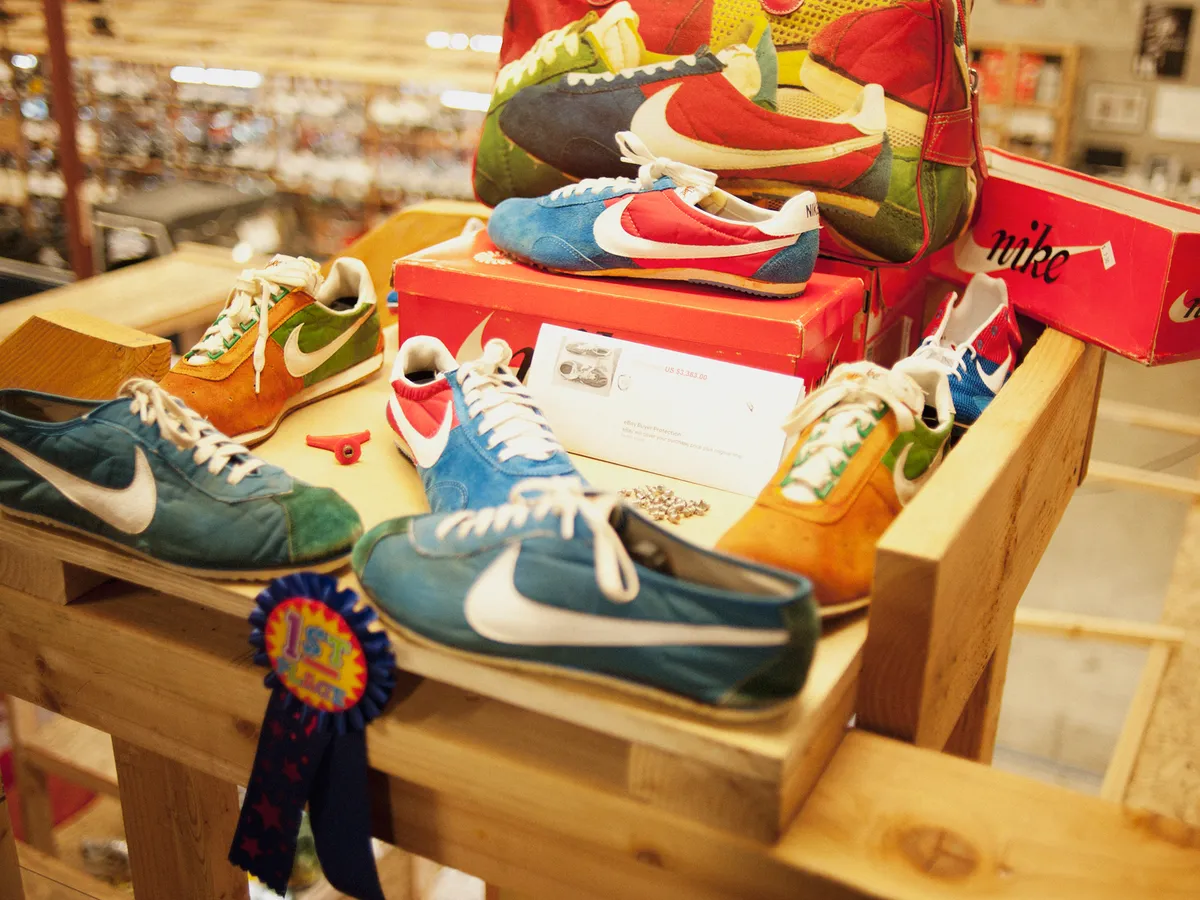
Here's the hard truth about sneaker collecting: deadstock doesn't mean forever. A pair can sit in its box, never worn, never touched, and still fall apart the first time someone laces it up. WIRED told the story of a collector in Japan who finally wore his original 1995 Air Max 95s two decades later. The midsoles collapsed in the first steps, before he even made it out the door. If you collect older pairs, or you're thinking about buying vintage, you need to understand why that happens.
Quick version: many sneaker midsoles are made from polyurethane (PU) foam, which slowly breaks down from moisture in the air (hydrolysis) and from oxygen (oxidation). Heat speeds both up, and light speeds up oxidation. You can slow it with good storage, but you can't stop it or reverse it. Yellowing, crusty glue and flat Air units are part of the same aging story.
What's actually happening inside the sole
Polyurethane is everywhere in footwear because it's light, comfortable and cheap to mold. The catch is that it doesn't last forever. In hydrolysis, water reacts with weak points in the polymer and cuts its long molecular chains into shorter pieces. As the chains break down, the foam loses strength. Moisture in the air is enough, which is why a pair can degrade sitting in a closet.
A Stanford chemist quoted by WIRED explained that some PU formulas include polyester segments, and ester bonds break down from water faster than other parts of the polymer. That's one reason two pairs of the same age can age very differently. A Northwestern chemistry professor told WIRED that both hydrolysis and oxidation speed up in foam PU and at higher temperatures, and that light speeds up oxidation further.
The scary part is that the damage happens on the inside first. A shoe sitting in a box has almost no load on it, so it can look perfect. Then someone bends it or puts their weight on it, the weakened foam can't take the stress, and it cracks or crumbles all at once. That's why it feels sudden even though it's been happening for years.
The usual signs of aging
Jordan Geller, the collector behind the ShoeZeum in Las Vegas (that's his display in the photo above), described the progression to WIRED: Air bubbles deflate, glue gets crusty and visible, white parts like netting and mesh turn yellow, and finally soles separate from the uppers. Here's what to watch for:
- Cracking midsole paint. Fine cracks in the paint on a PU midsole are often the first visible sign the foam underneath is weakening.
- Crumbling or flaking foam. Powdery bits in the box, or foam that flakes when pressed. That pair is done for wearing.
- Stiffness or stickiness. Foam that feels hard, or a soft, tacky surface, are both signs of breakdown.
- Sole separation. Gaps along the line where the sole meets the upper, or glue that looks dry and crusty.
- Flat Air units. Visible Air bags that look deflated or wrinkled.
- Yellowing. Icy and clear rubber soles yellow through oxidation, sped up by UV light and heat. White plastic parts, netting and mesh can yellow too.
Yellowing and crumbling aren't the same problem. A yellowed icy sole is mostly cosmetic. A crumbling midsole means the shoe can't be worn safely. A pair can have one without the other.
Not every material ages the same way
Polyurethane isn't the only foam out there. EVA foam (you'll also hear Phylon on Nike shoes) is common in midsoles, and it ages differently: instead of breaking down chemically the way PU does, it mostly flattens and loses its bounce with use and time. Rubber parts can harden and crack, and glue fails on its own schedule.
Materials matter for collectors in another way, too. WIRED noted that the original 1985 Air Jordan 1 used rubber rather than polyurethane in its midsole, and called that one reason those original pairs are so coveted. Newer foams are marketed as more stable. In that same story, a BASF manager said its TPU foam, the material behind Adidas Boost, is a far more stable compound than ordinary PU. Honestly, the only real test is time, so I don't assume any modern foam is immune.
How to slow it down
You can't stop the chemistry, but you can avoid speeding it up:
Affiliate disclosure: some links below are affiliate links to Amazon and eBay. If you buy through them, I may earn a small commission at no extra cost to you. As an Amazon Associate I earn from qualifying purchases. How this works.
- Cool, dry, dark and stable. Store pairs indoors in a closet or room with a steady temperature. Avoid attics, garages, basements, car trunks and anywhere near a window, heater or radiator.
- Keep them out of the sun. UV light speeds up oxidation and yellowing. Clear boxes are great for display, but keep them out of direct sunlight.
- Don't seal them airtight in plastic. It can trap moisture against the shoe.
- Silica gel helps with humidity, not miracles. Collectors love scattering silica packs in their boxes. That's fine for keeping a humid closet drier, but a chemistry professor told WIRED that silica packs would have a "minimal effect" on PU breakdown. The only lab-grade fix he suggested was an airtight steel vessel full of argon, which tells you how hard this problem is.
- Keep shoe trees or paper inside so the uppers keep their shape. Cedar shoe trees · silica gel packets
My sneaker care guide has the full cleaning and storage routine.
Wear them or keep them on ice?
This is a real debate in sneaker circles. Some people believe wearing a pair now and then keeps the foam alive. I wouldn't count on it. Hydrolysis is a chemical reaction with moisture, and wearing a shoe doesn't undo it. What wearing does do is put stress on foam that might already be weak. Geller's warning in WIRED was blunt: if your Nikes are ten years old or older, "wear them at your own risk."
My take: if you love a pair and it's still healthy, wear it and enjoy it. If you're keeping a pair on ice as a grail, go in knowing it's a display piece with a clock on it, not a time capsule.
Buying vintage: what I check
- Read the listing carefully. Words like "display only," "unwearable," "needs sole swap" or "wear at your own risk" mean exactly that. Price it as a display or project pair.
- Ask for close-ups of the midsole paint, the line where the sole meets the upper, the Air units and the outsole. Ask the seller to gently press the midsole on camera if it's a pricey pair.
- Check the size tag. On most modern Nike pairs, the size tag lists a production date range, which tells you roughly how old the pair is no matter what the listing says.
- Ask about storage. A pair that lived in a climate-controlled closet usually beats one that lived in a hot garage.
- Authenticate first. Old or not, check it's real. My guide to spotting fake Nikes covers the basics.
Remember that "DS" or "deadstock" only says the pair hasn't been worn. It says nothing about whether the foam is still healthy. My sneaker slang guide covers what those listing terms really promise.
Can you restore a crumbling pair?
Sometimes. There's a whole world of restorers who do sole swaps: they take the sole unit from a newer "donor" pair, often a retro of the same model, and attach it to the original upper. Good swaps take real skill and time. People also repaint midsoles with leather paint and use de-yellowing products on icy soles. Results vary, and some methods can damage soles, so practice on a beater first.
If you sell a restored pair, say so in the listing. A sole-swapped shoe isn't the same as an original pair, and buyers deserve to know. For where and how to sell, see how resale platforms work.
Shop: vintage Nikes on eBay · OG Jordan retros on eBay · clear drop-front sneaker boxes
Frequently asked questions
Do sneakers crumble even if they've never been worn?
Yes. Polyurethane midsoles break down from moisture and oxygen in the air whether or not the shoes are worn. An unworn pair can look perfect in the box and still crack or crumble the first time it's flexed.
Can hydrolysis be reversed?
No. Hydrolysis breaks the polymer chains in the foam, and that damage is permanent. Good storage can slow it down, and a sole swap can replace a failed sole, but the original foam can't be repaired.
Does silica gel stop sneakers from crumbling?
Not really. Silica gel can help keep a humid closet drier, but a chemistry professor told WIRED it would have a minimal effect on polyurethane breakdown. Cool, dry, dark and stable storage matters more.
Is yellowing the same as crumbling?
No. Yellowing of icy soles and white plastic parts comes mostly from oxidation, sped up by UV light and heat, and is mostly cosmetic. Crumbling is the foam breaking down structurally. A pair can have one without the other.
Sources: WIRED: The sneakerheads racing to save their kicks from decay (2015), Fuxiang Shoe Materials: why polyurethane midsoles crumble, Anderson Development: polyurethane elastomer hydrolytic stability.
Read next

Store opening soon
Golden Era Collectibles is my own shop for cards and collectibles. The first drop is being put together now.