How to Buy and Sell at a Card Show: Prep, Etiquette, Negotiating and Dealer Offers
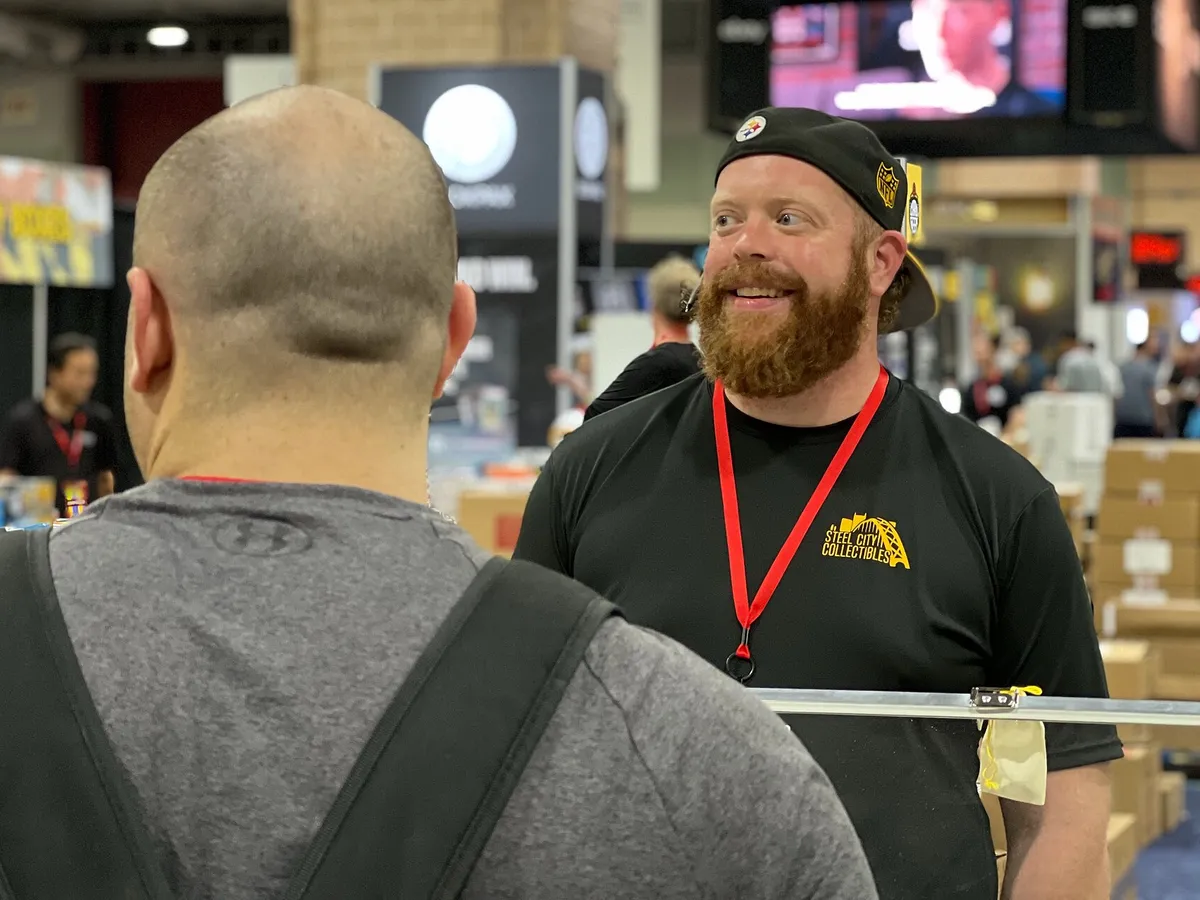
Buying cards online is convenient, but nothing beats a card show. You can hold the card before you pay for it, you can talk to people who know way more than you about one tiny corner of the hobby, and you can walk out with something you didn't know existed that morning. You can also blow your budget in the first twenty minutes on a card that's cheaper three tables down. I've learned most of this the slow way, so here's the routine I'd hand a friend before their first show.
Quick version: set a budget, bring cash and a want list with real sold prices, walk the whole room before you buy, ask before you touch anything, make real offers instead of asking for "your lowest," check every card and slab before you pay, and expect dealers to pay you less than sold prices when you sell.
What kind of show is it?
Card shows come in a few sizes, and it helps to know which one you're walking into:
- Trade nights and shop events. A handful of tables at a local card shop or a rented room. Great for trading and meeting people, and usually the least intimidating place to start.
- Local and regional shows. Hotel ballrooms, community halls, malls and expo centers, with anywhere from a few dozen to a few hundred tables. This is the classic card show most collectors grow up on.
- The National. The National Sports Collectors Convention has been held every year since 1980 and is one of the largest and best-known sports collectibles shows in the country. It's a whole different scale: big dealers, grading companies, card manufacturers and multi-day crowds.
The advice below works for all of them. The bigger the show, the more the prep matters.
Before you go
Affiliate disclosure: some links below are affiliate links to Amazon and eBay. If you buy through them, I may earn a small commission at no extra cost to you. As an Amazon Associate I earn from qualifying purchases. How this works.
- Set a budget and stick to it. Decide what you're spending before you park. Shows are designed to make you want everything.
- Bring cash, plus a backup. Plenty of dealers take cards or payment apps, but cash is still preferred at a lot of tables because it has no fees and doesn't need a signal. Venue ATMs run out, and cell service in a packed hall can be terrible.
- Make a want list with sold prices. For every card you're hunting, look up recent sold prices (not asking prices) and write them down. eBay sold listings are the easiest place to start. Browse cards on eBay before you go so you know what normal looks like.
- Pack supplies. Penny sleeves, toploaders, a few team bags and a small box or case so your new cards ride home safe. 35pt toploaders · acid-free penny sleeves · a card carrying case
- Charge your phone and bring a power bank. You'll be price-checking all day.
- If you're selling or trading, sort those cards ahead of time, put them in clean toploaders, and know your minimum for each one before you sit down.
Walk the whole room first
The single best habit I have is doing a full lap before I spend anything. Start in one corner and go row by row so you don't skip tables. The card that looks like a deal at the first table is often priced lower somewhere else, and the small table with one showcase is sometimes the best one in the building. The exception: if you find a card you've been hunting for months at a fair price, buy it. It won't be there when you come back.
While you walk, keep your own case or binder secure. Hold it, keep it between your feet when your hands are busy, or ask the dealer if you can set it on the table. Shows are friendly places, but crowded tables are also where things go missing.
Table etiquette
- Ask before you touch. Point at the card and ask to see it. Never open a dealer's showcase yourself, and don't pull a card out of a toploader or one-touch without asking.
- Hold cards over the table, never over the floor, and handle raw cards by the edges.
- Don't camp at a busy table. If you're just browsing and someone else is trying to buy, step aside. You can come back.
- Don't jump into someone else's deal. If two people are negotiating on a card, wait until they're done. Offering more over someone's shoulder is the fastest way to make enemies in a small hobby.
- Keep food and drinks off the tables.
- Don't trash a card to get the price down. If you don't like the centering, just make a lower offer or pass.
Check the card, not the price tag
A show lets you inspect a card in person, so actually do it. With raw cards, look at the corners, edges and surface under your phone's flashlight, tilting the card so scratches and print lines show up. Look past the price sticker, too: stickers usually sit on the sleeve or holder, and they can cover exactly the corner you'd care about. If a card's corners look sharper than the rest of the card's wear makes sense for, slow down and read my guide to spotting trimmed or altered cards.
For numbered cards and parallels, check that the serial number and the parallel are what the label or listing says they are. My guide to parallels and serial numbers helps if the colors all blur together. For graded slabs, type the cert number into the grading company's online verification on your phone, and compare the result to the card and label in front of you. PSA, Beckett, SGC and CGC all offer cert lookups.
How to negotiate without being that guy
Most dealers expect some back-and-forth, but there's a right way to do it:
- Make an offer instead of asking for the lowest. "What's your lowest?" asks the dealer to negotiate against himself. "Would you take this for it?" with a real number starts a real conversation. Asking "what's your best on these?" when you're buying several cards is also normal.
- Make fair offers. Base your number on the recent sold prices you looked up, not on the one cheap outlier sale you found. If a card is already priced fairly, a big lowball just ends the conversation. If a whole table is priced way over comps, don't argue. Move on.
- Bundle. Buying several cards from one table almost always gets a better total than buying them one at a time.
- Mention cash. If you're paying cash, say so. Some dealers will do a little better on cash because they skip card fees.
- A deal is a deal. Once you agree and pay, it's yours. Don't come back an hour later because you found it cheaper.
Selling or trading to dealers
Dealers buy cards at shows, and that can be a quick way to turn cards you're done with into cash or into the card you actually want. Go in with the right expectations: a dealer is going to offer less than recent sold prices. That isn't an insult. They have table fees, travel, selling fees and the risk that a card sits in their case for months. They need room to make money when they resell.
- Get two or three offers. Different dealers want different things, and offers vary a lot between tables.
- Match the dealer to the card. A vintage dealer probably isn't the best buyer for your modern rookie parallels, and the reverse is true too.
- Ask about cash vs. trade. Some dealers value a trade differently than a straight cash buy, so ask both ways if you're open to either.
- Know your minimum. If the offer is below it, say thanks and move on. Saying no is always allowed, on both sides of the table.
If you'd rather get closer to full value and don't mind the work, selling online is usually the better route for single cards. My guide on how to sell sports cards on eBay walks through it.
Getting your own table
Once you've been to a few shows, you might think about setting up as a seller. Most shows rent tables for a fee, so ask the promoter for their rates and rules. Price everything clearly before the doors open, bring change, keep your best cards in a locked or covered case, and have a friend help so you're never leaving the table alone. Expect to spend a lot of the day talking, which is honestly half the fun.
Things people forget
- Comfortable shoes, water and a snack. You'll walk and stand for hours.
- Early vs. late. Showing up early gets you the best selection. Late in the last day, some dealers are more open to deals so they don't have to pack everything back up. Neither is guaranteed.
- Grading at the show. At some big shows, grading companies take submissions in person. If you're thinking about grading something you bought, check my guide to whether a card is worth grading and my grading calculator first.
- Log what you bought when you get home: card, price, table. It makes your next show a lot easier.
The bottom line
A good card show day comes down to prep and manners. Know your prices, protect your cards, treat dealers the way you'd want to be treated across the table, and don't be afraid to walk away. Then get everything into sleeves and toploaders as soon as you get home. My card storage guide covers the rest.
Frequently asked questions
Do I need cash at a card show?
You don't strictly need it, since many dealers take cards or payment apps, but cash is still preferred at a lot of tables. It has no fees and works when the cell signal doesn't. Bring more than one way to pay.
Is it rude to negotiate at a card show?
No. Most dealers expect it. What's rude is lowballing a fairly priced card, asking for the lowest price without making an offer, or jumping into someone else's deal. Make a fair offer based on recent sold prices.
How much will a dealer pay for my cards?
Less than recent sold prices, because dealers need room to resell at a profit after table fees, travel and selling fees. How much less varies by dealer and card, so get offers from two or three tables.
How do I know a graded card at a show is real?
Look up the cert number on the grading company's website on your phone and compare the card, grade and label details to what's in front of you. Also look closely at the slab itself for signs of tampering.
Sources: Wikipedia: National Sports Collectors Convention, Haus of Sportscards: how to prepare for your first card show, Canada Card Shows: first card show guide, Northside TCG: what to expect at your first card show, Hawaii Card Shows: card show etiquette.
Read next
Store opening soon
Golden Era Collectibles is my own shop for cards and collectibles. The first drop is being put together now.